Hatshepsut
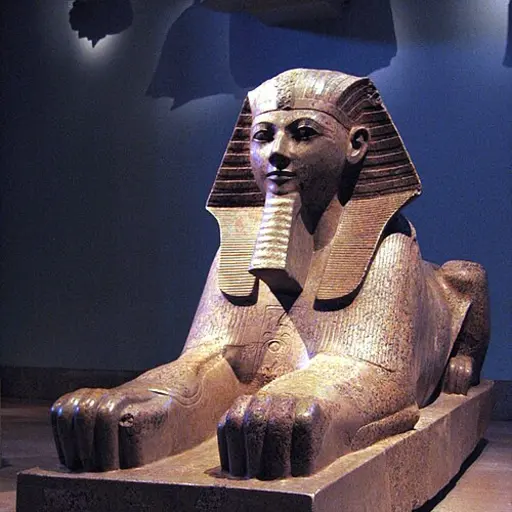

One of Egypt's rare female pharaohs, who sent a fleet to the Land of Punt.
Life
From regent to pharaoh
Hatshepsut was the daughter of Thutmose I and became the queen of her half-brother Thutmose II. After her husband died young, she first held power as regent for her infant stepson Thutmose III, and a few years later formally proclaimed herself pharaoh, adopting the full pharaonic regalia, including male royal clothing and a false beard.
Punt expedition and building works
Her reign was relatively peaceful at home, with no major military campaigns recorded; instead she concentrated on trade and building. She sent a fleet to the Land of Punt, which brought back myrrh, ebony and gold, and she built a grand mortuary temple at Deir el-Bahari, whose wall reliefs record the expedition in detail.
The mystery of her erased name
Some time after her death, in his later years, Thutmose III ordered her statues destroyed and her name erased from inscriptions. This was long interpreted as an act of revenge, but recent research leans toward seeing it as a ritual need to establish the legitimacy of the royal succession rather than a simple personal grudge; the exact motive remains unsettled.
Legacy
Hatshepsut reigned for about 20 years and was one of the few women rulers of ancient Egypt to formally take the title of king. Her rule excelled in peaceful trade and grand building, accumulating the national strength for the expansion under Thutmose III. Her name vanished from monuments for a time and only re-entered historical view when Egyptologists deciphered inscriptions in the 19th century. Today she is often seen as a symbol of female power, yet she herself relied precisely on the image of a male pharaoh to establish her legitimacy.
Major works & achievements
- Sent a fleet to the Land of Punt
- Built the mortuary temple at Deir el-Bahari
- Raised obelisks at the Temple of Karnak
- Her reign was stable and prosperous at home
Did you know? In 2007, by matching a tooth to the remains, scholars identified a female mummy from the Valley of the Kings as hers, though some scholars still have doubts.
Key dates
- 1479 BCECo-ruled with Thutmose III
- 1473 BCEProclaimed herself pharaoh, wearing male royal dress
- 1470 BCESent an expedition to the Land of Punt
- 1460 BCEBuilt the mortuary temple at Deir el-Bahari
- 1458 BCEDied