Han Xin
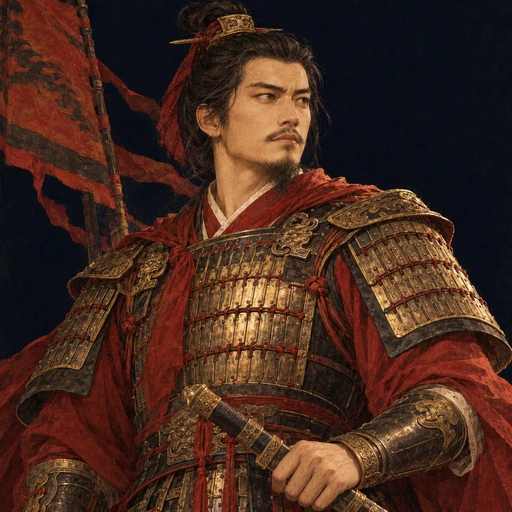
Secretly crossed at Chencang, fought with his back to the river and crushed Qi at the Wei River, winning half the empire for Liu Bang.
Life
Crawling Between Legs and the Moonlit Chase
Han Xin was a native of Huaiyin, poor in his youth, who once suffered the humiliation of crawling between a man's legs. He first joined Xiang Yu but was not given important posts, so he switched to Liu Bang. After Xiao He's strong recommendation, famed as "chasing Han Xin by moonlight," he was appointed supreme general.
Northern Campaign against the States
He devised for Liu Bang the plan of recovering the Three Qins, then opened the northern front: he raided Wei, defeated Dai, drew up his army with the river at its back at Jingxing to crush the Zhao army, and at the Wei River dammed the water with sandbags and struck the enemy mid-crossing, killing the Chu general Long Ju and pacifying Qi. Liu Bang made him King of Qi and later King of Chu. When he and Xiang Yu formed a three-way balance with Liu Bang, he rejected Kuai Tong's urging to strike out on his own.
When the hare dies, the hound is cooked
After the Han dynasty was founded, Liu Bang grew increasingly suspicious of him and first demoted him to Marquis of Huaiyin. In 196 BCE Empress Lü and Xiao He lured him into the Changle Palace and had him beheaded, and his clan was exterminated to the third degree. The sayings "Xiao He made him and Xiao He undid him" and "when the hare dies, the hound is cooked" both come from his story.
Legacy
Later generations called Han Xin the "Immortal of War," and his campaigns have been studied by military strategists through the ages. His fate, by contrast, became the classic lesson in the relationship between meritorious officials and emperors.
Major works & achievements
- Recovering the Three Qins
- Battle of Jingxing
- Battle of the Wei River
- Encirclement at Gaixia
Did you know? "The More the Better" comes from his conversation with Liu Bang about how many troops each of them could command.
Key dates
- 206 BCEAppointed supreme general
- 205 BCEConquered Wei and crushed Dai
- 204 BCEDefeated Zhao with his back to the river at the Battle of Jingxing
- 203 BCEDefeated the Chu general Long Ju at the Battle of the Wei River; made King of Qi
- 202 BCEBattle of Gaixia; reassigned as King of Chu
- 201 BCEDemoted to Marquis of Huaiyin
- 196 BCEExecuted by Empress Lü